
For an older adult, stretching her Social Security income and a working mother raising two young children, Catholic Charities of Oregon’s pop-up food pantry Wednesday, Oct. 21, offered some breathing room. Their stories show what food insecurity looks like in everyday life and why accessible food assistance matters.
Helen marked one year at Kenton Women’s Village earlier this month. At 64, she has become practiced at piecing together enough food to get through the week.
She eats two meals a day to stretch her budget. She visits food pantries, accepts help from friends and relies on food donated to the village. Sometimes, she and her neighbors pool what they have, cooking together or sharing a meal.
Those meals reflect the community the women have built. They also reveal how much effort it can take to meet a basic need.
Helen’s path to the village included losing her job and living with chronic hip and back pain. She no longer works and receives Social Security. Because she can’t work 20 hours a week, she says her SNAP benefits have been significantly reduced, leaving her with less assistance to buy groceries.
Her circumstances are her own. The work of making too little stretch far enough is familiar to many people who came to CCO’s pop-up food pantry this week.
A Line Before Opening Time
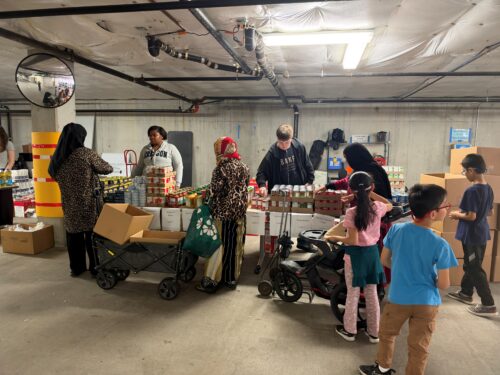
A crowd began gathering at the Clark Family Center’s garage entrance a couple of hours before the pantry’s 3 p.m. opening. Older adults and young families waited, some with children or dogs alongside them.
Inside, employees and volunteers prepared to distribute food and limited household supplies. The pantry was organized to prioritize CCO clients and building residents, with the welcome extended to anyone needing help.
Each person arrived with a different set of circumstances. Together, they made visible a need that often stays behind closed doors, in grocery budgets, kitchen cupboards and decisions about which meal to skip.
For Helen, a pantry visit is one part of an ongoing effort to have enough to eat. For Tamika, a working mother of two and a client of CCO’s Refugee Services, it offered help during a week when the family budget was stretched.
“Everything is so Expensive”
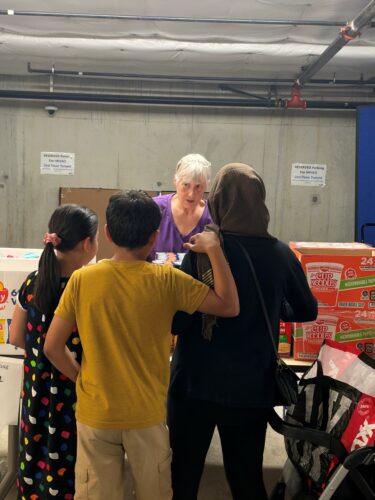
Tamika’s explanation was simple: “Everything is so expensive.”
She has a job and two children, ages 4 and 8. When she is not working, she is caring for them. Finding time to visit food pantries, particularly those far from her neighborhood, is difficult.
Food assistance may be available somewhere in the community, but reaching it has to fit around work and parenting. For Tamika, that makes a pantry at an organization where she already receives services especially useful.
The groceries would make life a little easier, at least that week.
Her experience underscores something important about hunger — having a job does not necessarily leave a family with enough money for food. And knowing where to find help does not always mean being able to get there.
A Growing Need Across Our Region
Helen and Tamika’s experiences sit within a much larger picture.
In its August 2026 hunger facts update, Oregon Food Bank reported that 1 in 6 people and 1 in 5 children in Oregon and Southwest Washington face food insecurity. Its network reported 2.9 million visits to food assistance sites in 2025, a 50 percent increase over two years. Those figures count visits, rather than individual people.
Nationally, the U.S. Department of Agriculture found that 18.3 million households, or 13.7 percent, experienced food insecurity at some point in 2024. Among households with children, the rate was 18. 4 percent. Food insecurity means a household can’t consistently obtain enough food because money or other resources are insufficient.
The numbers convey the scale. Helen and Tamika help explain the daily reality. Eating fewer meals, combining resources with neighbors, or trying to fit a pantry visit between a shift at work and caring for young children.
Food as Part of Stability
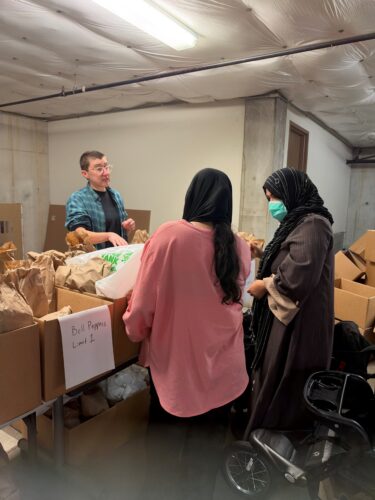
At Catholic Charities of Oregon, food assistance connects directly to our work helping people build stability. The people we serve may be navigating homelessness, settling into a new country, managing a health condition or raising children on a limited income. Grocery costs are part of that larger picture.
A pop-up pantry can’t resolve every pressure on a household. It can put food within reach and ease some of the strain while the other work continues.
We are grateful to the employees, volunteers and donors who made that possible this week.
At KWV, Helen and her neighbors already know the value of bringing what they have to the table and sharing it. The pantry extends that same spirit of care across our community, helping more neighbors have enough for their next meal.