
Through a partnership with Catholic Charities of Oregon, Concordia University nursing students are learning how trust, creativity and connection can support health. At Kenton Women’s Village, participants are helping shape those lessons, showing future nurses what compassionate care looks like in everyday interactions.
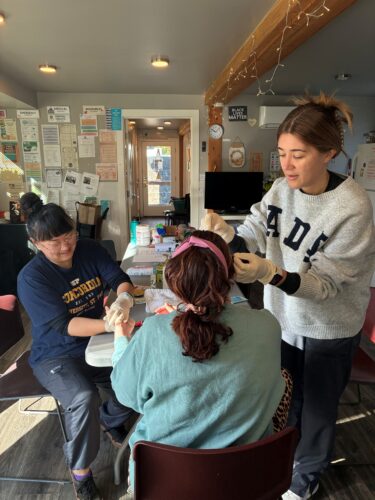
A hand massage. A conversation over a painted rock. A few minutes of chair Tai Chi.
At Kenton Women’s Village, these moments have become opportunities for nursing students and KWV participants to get to know one another. Over time, that familiarity has grown into trust, giving students a deeper understanding of how relationships support care.
The village is currently welcoming its third of four Concordia University nursing student cohorts this year. Under the guidance of clinical instructor Gini Hand, students in the Bachelor of Science in Nursing Population Health course complete clinical rotations that bring classroom concepts into a community setting.
For Hand, the experience has been especially meaningful because residents help guide what happens next.
Getting to Know the Person
Unlike many traditional clinical experiences, students arrive at KWV without a patient history or background information about the people they will meet. They must begin by getting to know each resident, respecting their preferences and finding opportunities to connect.
The learning begins with taking time to get to know each resident.
“The students have to learn how to approach each person without assumptions, build trust, recognize individual preferences and identify meaningful opportunities to engage with residents,” Hand said.
It also gives students a practical understanding of trauma-informed care, paying attention to how someone responds, respecting their choices and allowing comfort and trust to develop at their own pace.
Those lessons emerge through repeated visits and small interactions. A resident who initially keeps their distance may eventually join an activity or stop to talk. Students learn to recognize the value of those moments without rushing them.
Letting Residents Lead the Way
Some of the clearest lessons have come from activities that did not go as planned.
Students initially offered nutrition education and healthy smoothies, expecting them to generate interest. Participation was limited. Therapeutic facials, chair Tai Chi, mandala rock painting and making stress balls drew greater engagement.
The experience promoted students to reconsider how they decided what to offer.
“We cannot assume that we know what people need or want simply because we think an activity is beneficial,” Hand said.
Instead, students have learned to listen, observe and adapt. KWV participant interests and responses shape the activities, creating more opportunities for engagement on their own terms.
Alongside creative and relaxing activities, students have offered vision screening, wound care and vital sign checks. Together these experiences broaden their understanding of how nurses can promote healthy beyond a traditional setting.
Watching Trust Take Shape
For KWV Program Coordinator Allison Pantano-Rumsey, watching relationships develop has been a rewarding aspect of the partnership.
“It has been a pleasure having Gini and the Concordia nursing students complete their clinical rotations at the village,” she said. “It has been great watching the participants develop trust and interact with them.”
For students, that growing connection reinforces a lesson they can carry into their nursing careers — meaningful care beings with understanding the person receiving it.
“Nursing and population health are not always about providing a specific intervention,” Hand said. “They are also about creating opportunities for connection, dignity, trust, and community.”
At Kenton Women’s Village, residents are helping future nurses put that understanding into practice, one conversation and one visit at a time.